Sunday, February 28, 2016

In The Pursuit Of Happiness

How is our relationship with the environment affected by our definition of happiness?
How our views on progress are affected by the way we measure it?

This week in our Earthkeeping class we were addressing these questions based on the knowledge we have of our human nature. This week we started reading Aristotle's "Nicomachean Ethics" and Bouma-Prediger's book "For The Beauty Of The Earth." (You can read an excellent review of the book following this link.)
In Nicomachean Ethics Aristotle brings back the idea of balance within temperament and action. Citizens should have a balanced approach between what we need and what we want. Starting in the first book Aristotle points out that "every art, every inquiry, every action, and pursuit is thought to aim at some good." Later Aristotle defines what this "good" is based on the idea of what makes people happy. So the first thing we have to articulate and define is the meaning of happiness. Aristotle refers to happiness using the Greek word Eudenomia or Eudainomia  that translates also as "welfare" meaning that in that mental state people will flourish in their lives and endeavors.

Here we bring Bouma-Prediger's book where he is first describing where we are in the evolution of our society. How our definition of progress based on material possessions has missed the point of human well-being and welfare. Bouma-Prediger describes how we have to use a different approach to how we measure eudenomia. Maybe using some kind of index of well-being and happiness.

The questions posed at the beginning need further analysis, so we will have to come to them later on. For now we can stop and think what was declared in 1776 as the United States became an independent nation: "We hold these truths to be self-evident, that all men are created equal, that they are endowed by their Creator with certain unalienable Rights, that among these are Life, Liberty and the pursuit of Happiness."     

Sunday, February 14, 2016

Ecocentrism and Sustainability

What is our worldview that guides our relationship with the environment? Are our neighbors an influence in our relationship with the environment?

Questions that come to mind when thinking about political processes that affect how we live.
In today's post I want to analyze how we develop a worldview that becomes the context in which one acts politically. So it may be appropriate to first try to clarify what do know about our worldview and how do we define a relationship with the environment.
In the beginning of our human view of the world we had us as the center of all, what is called an anthropocentric view of the world, the environment surrounding primitive societies was just taken for granted and humans worried only about how to survive and so they as nomads moved from place to place gathering and hunting as they found best.

Later they started to settle in a way that they had to care for the animals and crops that provided sustainment, they amplified their view of the world making all living things the center of their activities, developing a bio-centric worldview. Expanding their activities not only for the immediate survival of their humanity but recognizing that their survival depended on the well-being of the living surrounding. Other resources such as water and land were taken for granted as they seem to be infinite, inexhaustible. But then humans became (or are becoming) to realize that we don't live on an infinite, inexhaustible world of resources. That water, land, and air are finite resources that easily can be polluted and exhausted. Now we are developing an eco-centric world view.


In this worldview we find the question about our relationship with the environment that is influenced by our neighbors critical. As it becomes a political question. More so because our systematic relationship is in continuous adaptation and it's been re-defined due to competing need of our society.
So when we hear the word "sustainability" different ideas come to mind depending on our social status and background.

Language matters. That is why we must be continuously aware of the fact that we need to get to a consensus about the meaning of certain words; words like neighbor, and sustainability. So let me state that for me, we are all neighbors, regardless of where we live, what language we speak, or what religion (or none) we profess. As humans in this world we are all related through the same atmosphere, the same oceans, and the same Earth.
For a definition of sustainability we can use what the UN says when speaking about sustainable development as the use of resources without affecting the needs of future generations. Sustaiable then gives the sense of process, where continuous activities with positive outcomes that will not have adverse effect on future generations.

Today we celebrate Saint Valentine's day, the day we celebrate love. There is no better way to demonstrate our love than taking care of the Earth, taking care or our neighbor, taking care of the environment.

Sunday, January 31, 2016

Justice and Balance


Environmental Values and Ethics

Reading today’s political commentary in the news one finds that there is a divide where “Christians” are supposed to be anti-environmental, deniers of science and facts. This is even though there are many environmental organizations that identify themselves as Christian. For example the Evangelical Environmental Network and Restoring Eden are broad based organizations that are very active in the political process of environmental protection.

So let us ask the following questions:

In what ways has Christianity been considered problematic environmentally?  What are for Christians possible responses to that charge?

Using a brief description for ethics as the branch of philosophy that deals with good and bad, and these defined within the framework of our cultural values. Western Culture is based on the philosophical framework stablished by the Greeks such as Aristotle, Plato, and Socrates. So looking at The Republic by Plato one finds the beginning of the idea of balance in our society. This idea of balance has been described since as “justice” and we need to see the implications of this justice when dealing with the environment.     

Then when we look at the way that Christianity supported progress during the modern era, we find passages in the Bible that speak to the superiority of humans over the rest of creation, some would say that the creation was to support human life and therefore humans have all the right to subdue the earth as stated in Genesis. [Genesis 1:28 God blessed them, and God said to them, “Be fruitful and multiply, and fill the earth and subdue it; and have dominium over the fish of the sea and over the birds if the air and over every living thing that moves upon the earth.” NRSV Bible]. One may argue, based on this reading that we have absolute power over nature. On top of this there are economic pressures to use natural resources in order to support the rapid pace of our progress. When progress is good just because makes life for humans better, more convenient, and secure. Being the center of creation has some advantages, right?

So how can we respond to the second question? Looking at the creation not from the anthropocentric point of view but from an ecocentric point of view as stated by Withgott and Laposata in their book Environment: The Science Behind The Stories we find also in the Bible references to our responsibility as stewards of God’s creation. In Ecclesiastes 1:1-4 we can clearly see that humans are vane and not the center of creation. “The words of the Teacher, the son of David, king in Jerusalem. Vanity of vanities, says the Teacher, vanity of vanities! All is vanity. What do people gain from all the toil at which they toil under the sun? A generation goes, and a generation comes, but the earth remains forever.”

There you have it!

For sure it is imperative that we learn more about justice and balance so we can see how to deal with the environment.


Sunday, January 24, 2016

Why Liberal Arts?

-->
As we start a new semester at WPC in the environmental studies class called "Earthkeeping" we asked the question: Why is this class within Liberal Arts? The answer of course is not simple and will take many sessions to get to some kind of unified statement. But, one thing is for sure, "liberal Arts" are addressing the relationships between our 'human nature' and our 'human activities.' For instance: what is our sense of place? How do we relate to the environment that surround us based on our knowledge of it. This analysis includes the development of a language, with proper vocabulary and nomenclature. Words, like 'bioregion', 'biocommunity', and 'biodiversity' have become vernacular but in many ways our society use them without proper rigor. Thus, it is necessary to produce proper definitions for these terms. 

Next we have to make the connection to all aspects of our humanity. Not only we are or should be interested on our biological nature but also (and I believe, most importantly) with our spiritual nature. Questions like: How does 'sacredness' applies to our relationship with the Earth? Do we have to develop a sense of reverence when dealing with natural resources? What would be the guiding principles to do this?
As humans we share a unique sense of being, but it is critical that we also understand the variety of sensibilities as developed by cultures around the globe. Becoming aware of how different cultures like the Japanese, and other Asian cultures, Native-Americans, and other primitive cultures, and Western cultures starting with the Greeks from antiquity is critical for the understanding of our modern relationship with the environment.
In order to do this in class we have seen videos like Kurosawa's 'Dreams' that reflect a deep sense of reverence to nature. Bible verses like Ecclesiastes 1:1-11; Leviticus 25:4-19, and Exodus 3: 1-12 (Moses and the Burning Bush) that bring a sense of 'moral' landscape to our daily life.

On the other hand, we have to address the notion of scientific knowledge. Also, as a human endeavor the natural sciences, from physics to biology are the practical tools we have to develop technologies that will help us to use natural resources without compromising the needs of future generations. Which by the way is how the UN defines sustainability. We can think of 'sustainability as a 'friendly relationship' with the environment. Where the word friendly would indicate that is this relationship there is no harm but beyond that we need a more accurate definition of the word sustainability or of the idea of sustainable development. That is if we agree that our society has to be in perpetual development as some of us think as we do not see how can we as a society live without change. 

As we create a language to address our survival in relation with the use of natural resources, words like ecological, environmental, and resources will need to be defined and used in a precise way.

Many times definitions use the negative as when we mention what it is not in the clarification of what it is! For example conservation is not in general about keeping things as they are, as many practices today in the extraction of natural resources can't be kept for ever, these resources will diminish and eventually cease to exist.

Sunday, January 3, 2016

New Year 2016

Portland OR is starting 2016 with a couple of beautiful sunny days and.. snow!
As last year's main event related to the environment was the United Nations meeting on climate change in Paris we are looking forward to see how around the world this accord will make things different. We will see if the momentum gained during the conference is maintained and how countries will use the momentum to enable new policies toward improving the conditions to develop new technologies and implement the technologies that we already have that will move our economies away from carbon, or to use carbon in a more efficient way that will not cause harm to the environment. To find out more about the conference link UN's November 2015 Framework Convention on Climate Change. The conference under the leadership of Christiana Figueres was a success. Born in Costa Rica and trained in the London School of Economics and Georgetown University, Ms Figueres has been involved in sustainable development for a long time. You can read her blog clicking here and twitts @CFigueres.

Even though every day is like every other day, there is something special about the beginning days of the new year. We go around in circles, some are seasonal like winter, spring, summer, and fall but we never get back to the same spot. It could be winter as the winter before but is a different winter, dah! This is what makes working for the environment so precious and important, changes are coming and we are part of the change. In some ways we are inducing negative changes sometimes they are positive. Even though there is little we can do individually to affect the worlds climate, there is a lot we can do by doing it together. Kind of a paradox.

For me it is about education, and this blog is part of my effort to share with the world what is going on and what can be done. As a paradox there is little we can do and it is a lot. Having the correct attitude produces a change not only in our perspective but most importantly in our actions. Being able to stay at home (like today when the weather is not proper to go out if not necessary) and not feeling guilty is a gain we can all get. Using the time to learn, read, write, and enjoy life as it unfolds is the thing to do in this case. Learning about cultures around the world and finding out what their struggles are and how they as society are finding ways to prosper and thrive is uplifting and satisfying. Not everyone has to have the same answer or the same solution for a particular problem such as transportation.

In the USA we have developed a system that looks highly individualistic but relies on a strong social network that sustains each individual. We in general are used to drive our own cars but we rely on streets being open for transit. The common good is necessary for the individual good, that was articulated many years ago by Kropotkin in his book "Mutual Aid" where he makes the argument that evolution has made it necessary for commonality. Kropotkin became one of the most influential writers of the XX century due to his clear systematic and solid way of arguing his ideas based on scientific evidence. Being an activist for the environment has to be done al several levels from local like the classroom to global, going through school, city, region, and country. At the classroom level Warner Pacific College is committed to the formation of students that are well prepared for the challenges of a constantly changing world and, among other classes, offers classes in Environmental Science, Environmental Studies, and Earthkeeping.

At the city level Portland OR is an active place for environmentalism, from US Congressman Earl Blumenauer who has been an advocate for public transportation to local organization you can find on Meetup. Bill Bradbury in particular has been working at the grassroots level to organize the citizenry.
Oregon is and will be a leading place in this new era, I am glad to be here at this time to be part of this change and to witness how as a society we can come together working for the benefit of the commons. 

 I am very optimistic.

Saturday, November 7, 2015

Activism, the XL-Keystone Pipeline and Sociopathy

For the time being the Keystone Pipeline project is dead.  http://www.cnn.com/2015/11/06/politics/keystone-xl-pipeline-decision-rejection-kerry/
The reason stated is that the pipeline will not serve the interests of the United States of America and will contribute to the worsening of the environmental conditions around the planet. Environmentalists are pleased with the decision and know that to a great extent this decision was taken in part due to a huge political pressure created by activism. This phenomenon is been observed in other arenas of our political life, like the process in the selection of candidates for the US presidency currently in the way.

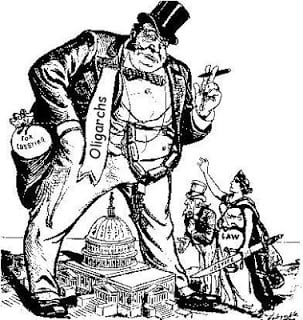
Activism is, has been, and should continue to be an honorable participation of the citizenry of any country. It is the only means citizens have to oppose the paramount force that multinational corporations have in the development, and progress of our society. We should hope that soon, through educating the leadership of these corporations, activism would not be necessary to oppose corporations as they will be directed by citizens and not, as most are today, by sociopaths. Sick of their minds these sociopaths are in charge of a corporate power that is working against the wellbeing of the common populace. Their decision making is based on an ill desire of wealth accumulation and not in the desire of benefiting the community. As with any illness, sociopathy has to be addressed by our society. The lack of proper education and mental medical attention has produced in our society a class of people (so called 1%) with a clear manifestation of an intense antisocial behavior. Worst than any other illness and disease, sociopathy is not recognized as an environmental disease. In fact those affected by it, do not recognize that they are sick. Intelligent as they are, they have found mechanisms for defense and are able to coverup their illness under a blanket of economic ideology.

You might not agree with me that these CEOs are sociopaths, but ask yourself:

Who would need more than 1 million dollars a month?

Why is the exaggerated income of these CEOs not challenged by those who can challenge it?

Finally, What are you going to do about it?

Monday, September 21, 2015

Comemmorating Chris

We were all shocked when Chris passed in such a sudden and unexpected way. Many of us who knew her immediately thought of ways to keep her in our thoughts and to keep her legacy going. Last Thursday (summoned by Dr. Dupriest) a small group of us gathered to brainstorm ideas about how to do it. Present in the meeting besides Dr. Dupriest were Dr. Martin, Prof. Dobrenen, Prof. Hartzell, and myself. Others who couldn't be there are also participating in this endeavor.
Among the ideas was one that everybody in the meeting thought was a great idea. Building a labyrinth in the Mt. Tabor campus of Warner Pacific College. The idea proposed by Prof. Hartzell has a history and is well argumented. The history goes back to when Prof. Hartzell and Chris during one of their doctoral classes at Concordia University had to read a book where the labyrinth was used as a metaphor for finding oneself. The 'life journey' that Chris was so much about.

St. Bertin labyrinth from www.luc.edu
We have to do a lot to make this happen, if we (WPC) decide it is the right thing to do. From getting the proper authorization from WPC to getting the funds to do it, but I feel that this idea is worth pursuing. This is why I am blogging about it because we would like to have your feedback and support. 

Of course it goes without saying that whatever we decide to do is going to be good for the environment! It will be something that represents Chris' stewardship.

Can give us some feedback?